Nature of the forest
The climate, woodland, plants and animals of Białowieża Forest: old oak and spruce woods, some nine hundred plant species and the largest herd of bison.
Climate
Białowieża Forest lies in the warmest part of Belarus, with the country's shortest and mildest winter and its longest growing season. According to long-term records from the weather station in Kamenyuki (1948-1995), the mean annual temperature is about 6.6 °C, July is the warmest month, a lasting snow cover stays for no more than 50-60 days and in some winters does not form at all. About 620 millimetres of rain and snow fall each year, two thirds of it in the warm season. In climate the forest is closer to Central Europe than to the rest of Belarus, and its plants and animals show it.
Woodland
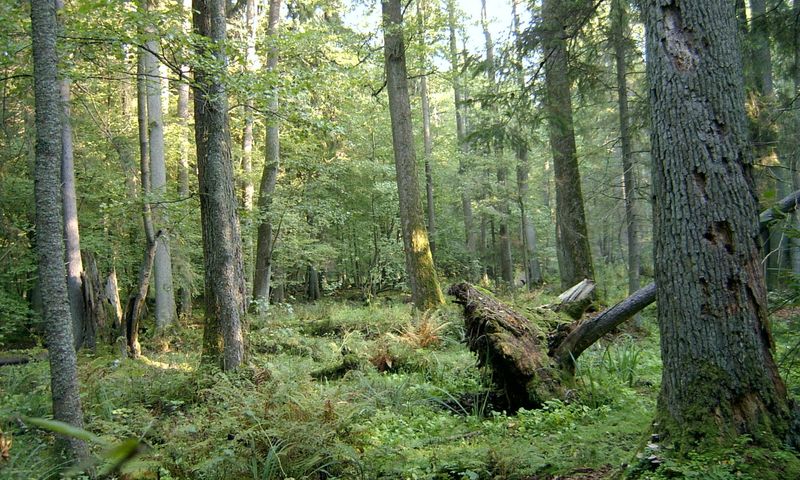
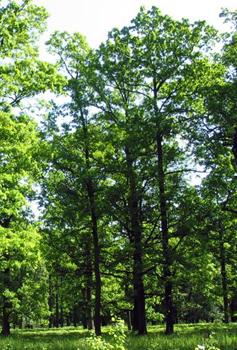
The forest is a mixed woodland in which trees of the northern taiga grow alongside those of Europe's broadleaf forests. Pine and spruce stands form its backbone; on richer soils there are oak woods with hornbeam, maple, lime and ash, and in the hollows alder and birch woods. Trees here reach an age they never reach in a managed forest: oaks several hundred years old, pines and spruces as tall as an apartment block. Dead trees are left in the protected core - standing deadwood and fallen logs support hundreds of species of fungi, insects, mosses and lichens, many of them rare throughout Europe.
Plants
Older descriptions of the park count about nine hundred species of vascular plants in the forest - almost two thirds of the flora of Belarus. Among them are the silver fir, rare in this region, ivy climbing up tree trunks, the lady's slipper orchid, the globeflower and many other species from the Red Book. More about the forest's plants is on the Plants and animals page.
Animals
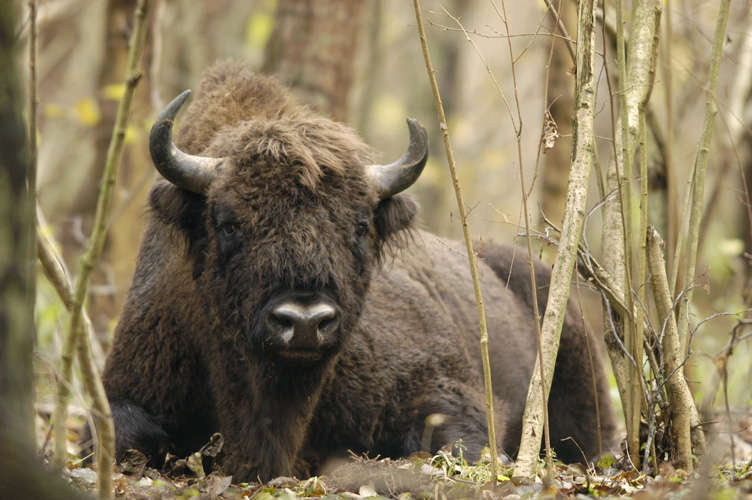
The symbol of the forest is the European bison, the largest animal in Europe. It died out in the wild in the early 20th century, and the herd here had to be rebuilt from animals that survived in zoos. According to the national park, 784 bison were counted in the Belarusian part of the forest on 1 January 2026; together with the Polish side this is the largest free-ranging population of the species in the world.
The abundance of red deer, roe deer, elk and wild boar supports large predators - the wolf and the lynx. Beavers, otters and mink live along the rivers and reservoirs. The forest's birds include the white-tailed eagle, golden eagle, greater and lesser spotted eagles, booted eagle and, occasionally, the peregrine falcon; mute and whooper swans, greylag geese and goldeneyes nest on the reservoirs.