600 years of protection
In 2009 the forest marked 600 years of protection: why it is counted from 1409 and how the forest survived when the woods around it disappeared.
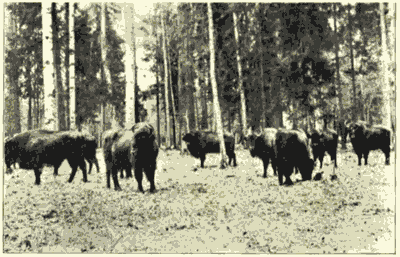
Białowieża Forest is a remnant of a vast ancient forest that once stretched from the Baltic Sea to the Bug and from the Oder to the Dnieper. Almost all of it was cut down; a few fragments survived, and the Pushcha is the largest of them. In 2009 the national park celebrated 600 years of protection, counting from 1409.
Why 1409
In 1409, after the congress in Brest, King Jogaila held a great hunt in the forest to lay in provisions for his army. From then on the forest was known as the hunting ground of rulers, who kept the right to hunt for themselves and protected the woods for their own hunts. The owners changed - grand dukes of Lithuania, kings of Poland, Russian emperors - and the protection was sometimes tightened and sometimes relaxed, but it was never abolished. The bison helped too: to keep them, the forest had to be kept as well.
Protection in the modern sense
As a protected natural area the forest dates from 1921, when the Reserve forest district was set aside in its Polish part. In 1939 the whole Belarusian part became a state nature reserve, in 1957 a reserve and hunting estate, and in 1991 the Belovezhskaya Pushcha National Park was created on its basis. In 1992 the forest joined the UNESCO World Heritage List, in 1993 it became a biosphere reserve, and in 1997 it received the Council of Europe's diploma.
What six centuries preserved
The forest's greatest treasure is woodland that has kept much of its primeval character: six-hundred-year-old oaks, ashes and pines three and a half centuries old, giant trees, and communities of plants and animals that combine taiga and broadleaf forest - nothing like it survives anywhere else in Europe. Historical monuments have survived too: ancient barrows, sacrificial stones and traces of the Tsar's Road. And the chief symbol of six centuries of protection is still the bison, which was saved from extinction precisely here.
The giant trees and memorable places of the forest are in the Places section.