Russian emperors in the forest
The forest under the Russian emperors: Catherine II's land grants, Alexander I's bison decree, Alexander II's hunt of 1860 and the hunts of the last tsars.
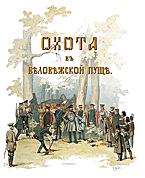
Białowieża Forest became part of the Russian Empire in 1795, under Catherine II. The empress never visited the forest herself, but she generously gave its land to her favourites and allowed them to hunt anything except bison; she was also happy to grant permission to shoot bison for European museums. In these years the forest thinned out badly, and bears and beavers were wiped out.
The bison decree
The turning point came under Alexander I. In 1802 he issued a decree that began the protection of the bison in Russia: to preserve "a particularly rare kind of game", felling trees in the forest was banned, pastures were set aside for the bison, and from 1809 they were counted regularly. In 1812 the forest found itself in the path of the Napoleonic wars: the Austrian corps of Schwarzenberg, stationed nearby, gathered provisions here and killed much of the game, bison included. There were no big battles in the forest - the bogs and thickets got in the way.
Imperial hunts
The first Russian emperor to come and hunt in the forest was Alexander II, in 1860. Over three days of hunting, according to old accounts, 28 bison were killed, not counting other game; a cast-iron bison was set up in Białowieża to commemorate it. Game for the hunt had to be driven in from the surrounding forests, and afterwards the protection of the forest was tightened; from 1864 red deer, wiped out here as early as the 17th century, were brought in from Germany.
In 1888 the forest became the property of the imperial family. A hunting palace was built in Białowieża, where Alexander III and Nicholas II hunted, and the forest was managed for hunting: game numbers were increased, red deer, fallow deer and roe deer were brought in, and a gamekeeping service was maintained. Under Nicholas II felling almost stopped, with only windfall and dead trees being cleared, and in 1913 work began on a museum of the forest's nature and history. Two years later the war put an end to the imperial forest.
Detailed descriptions of the imperial hunts are in the book "Grand-ducal, tsarist and imperial hunting in Rus" in the site's library.