Prehistoric people in the forest
When people first came to the forest: hunters after the ice retreated, flint tools, a forest island amid the floods and the barrows of the Milograd culture.
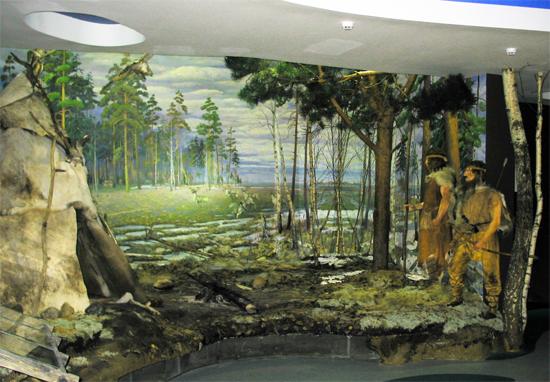
People could settle where the forest stands today only after the last glacier, the Poozerye glaciation, retreated northwards 14,000 to 10,000 years ago. The landscape then resembled forest tundra, and the first hunters came from the west - from what is now Denmark, northern Germany and Poland - and gradually spread far to the east.
They lived in huts dug slightly into the ground and insulated with hides, and kept a fire burning by the dwelling at all times. Their tools were made of flint and of reindeer antler and bone. They lived by hunting, fishing and gathering; once the bow and arrow spread, almost every forest animal and bird became their prey.
A forest island
For a hunter the forest was a rich place. In spring the bogs around it flooded into a vast sea, and the forest turned into an island where animals escaping the water gathered. Flint, the main material for tools, was close at hand. But almost no monuments of that distant age have survived.
Barrows
The oldest known burials in the forest belong to the Milograd culture of the 7th-3rd centuries BC. Most of the barrows, however, were raised much later, probably in the 11th-13th centuries. They stretch in chains along the Narewka, the Narew and the Lesnaya; next to them lie weathered boulders thought to be pagan sacrificial stones. Sunken barrows by quiet forest streams are among the few reminders that the forest was not always uninhabited.
The tribe that lived in the forest in the 11th-13th centuries is described in the essay The Yotvingians.