Forest Secrets
A 19 km cycling route from the Museum of Nature through the south of the forest: the Hermit Oak, the Tatar Bog, the Turlyuy tract, the narrow-gauge line, giant oaks.
- Type
- Cycling routes
- Length
- 19 km
- Time
- 3 h
- Difficulty
- moderate
- Stops
- 16
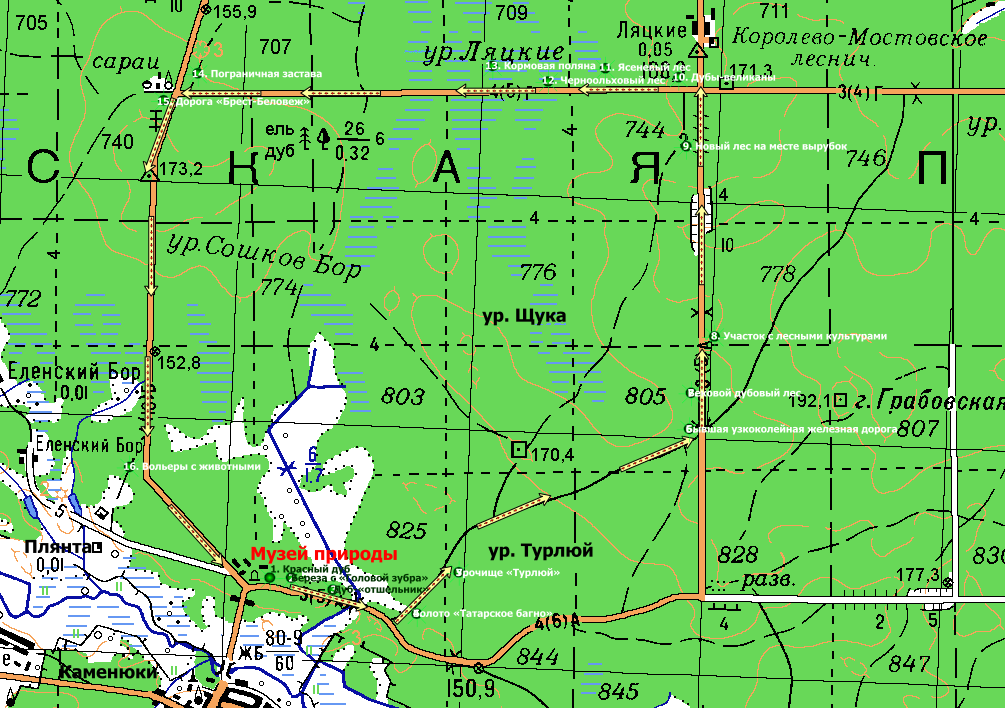
The route starts at the Museum of Nature in Kamenyuki and loops through the south of the forest - through compartments 805, 807 and 744 to the 3rd border post and back. It is 19 kilometres long, about three hours by bike with stops, on surfaced roads.
Forest Secrets is a route about how the forest works. Here the red oak, a newcomer from North America, grows next to ancient oak woods; the Tatar Bog is said to have sheltered a Tatar camp in the 13th century, the Turlyuy tract still shows the fires that followed the First World War, and the embankment of a former narrow-gauge railway recalls the fellings of that war. Along the way you can see how new forest grows on old clearings and how ash, black alder and oak woods differ from one another. At the end are the wildlife enclosures by the Museum of Nature.
Check the visiting procedure and whether a guide is required on the national park's website.
Stops
- 1
- 2
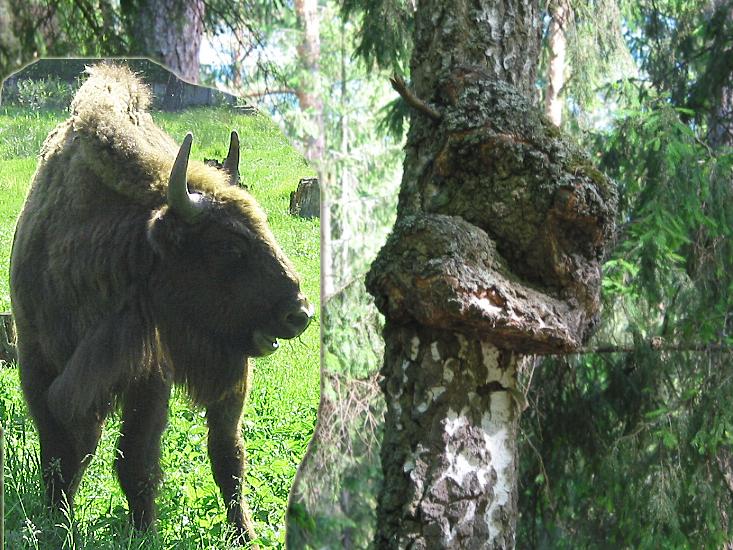
The birch with a bison's head
A burl on a birch shaped like the head of an old bison - one of the first stops on the cycling routes from the Museum of Nature and a favourite photo spot.
More → - 3
The Hermit Oak
A gnarled oak about 300 years old at the edge of a former bog: a 1.5-metre trunk and a hollow full of carpenter ants. A stop on three cycling routes.
More → - 4
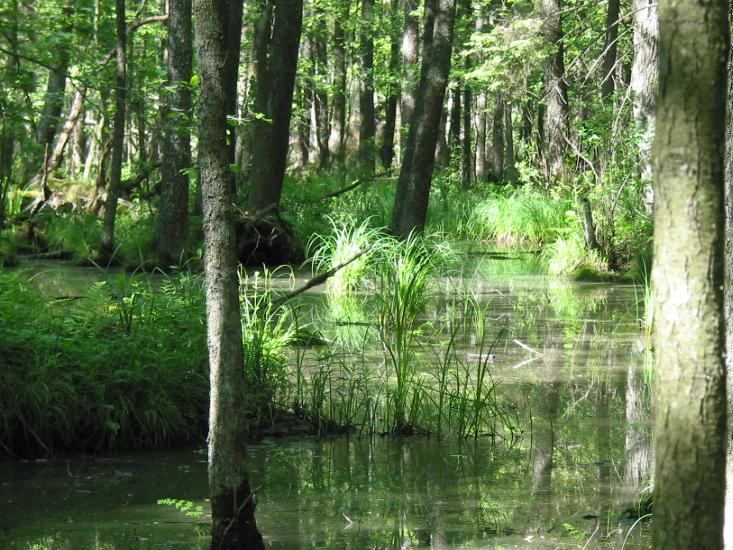
The Tatar Bog
A dried-up bog said to have sheltered a Tatar camp in the 13th century; in spring it is still impassable. A stop on three cycling routes.
More → - 5
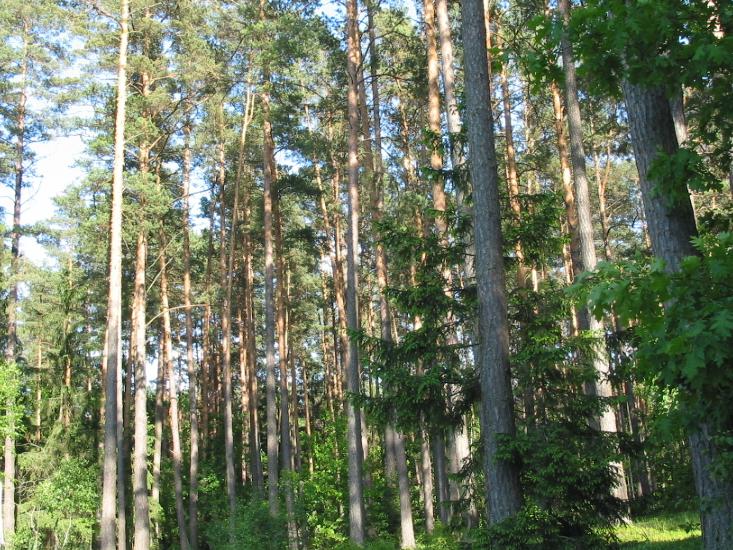
Turlyuy tract
A pine forest planted in the early 1930s on the site of a big fire after the First World War: on poor sand it still looks young.
More → - 7
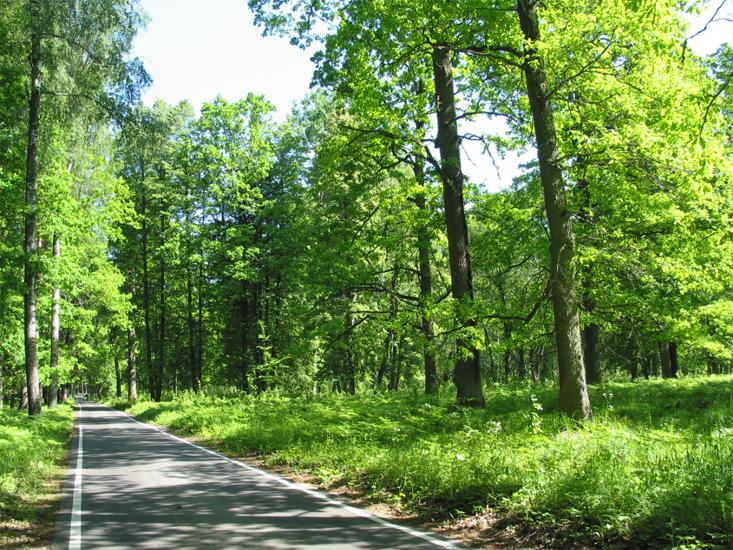
Former narrow-gauge railway
The embankment of a narrow-gauge railway built by the occupiers in 1915-1918: 325 km of track and 4.5 million cubic metres of timber taken out. A stop on four routes.
More → - 8
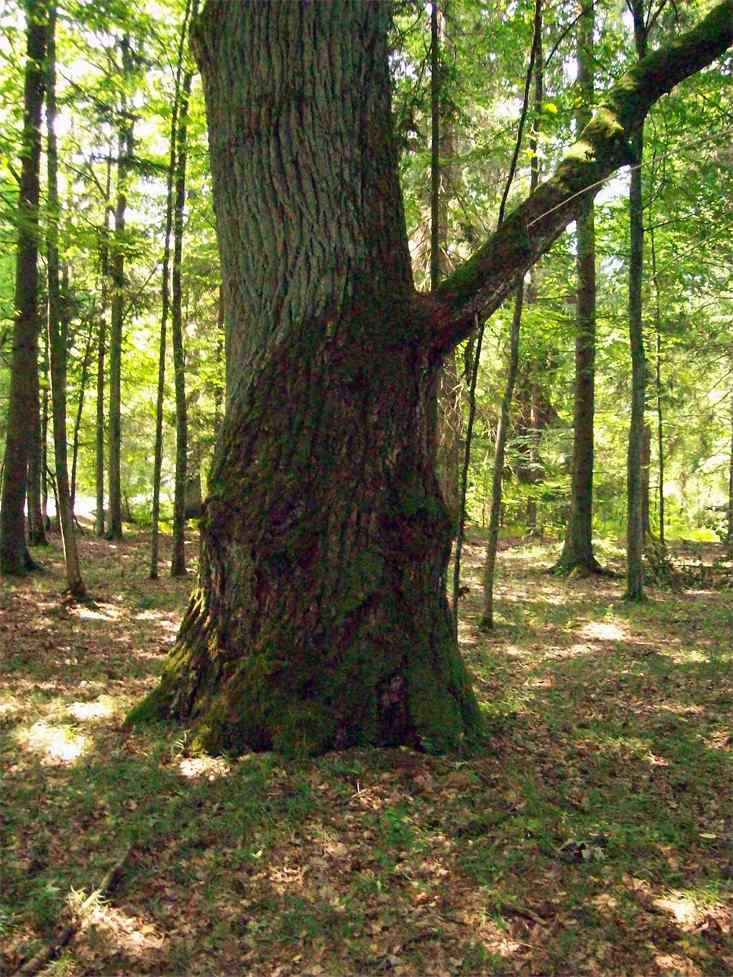
Ancient oak wood
A broadleaf wood with oaks 200-400 years old on brown forest soils - the "golden reserve" of the forest on the cycling routes.
More → - 9
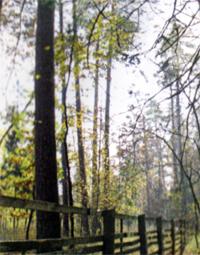
Plot with planted trees
A plot where seedlings were planted after the spruce wood died in 2002, part of it fenced: an experiment showing how deer stop a forest from growing.
More → - 10
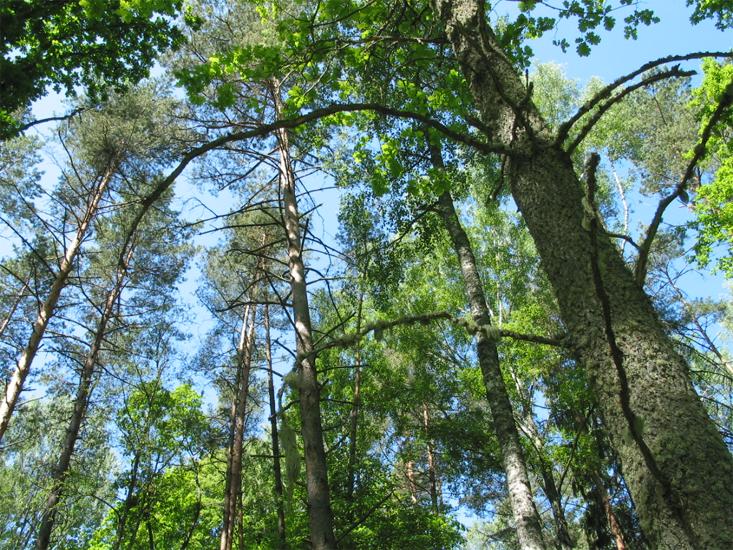
New forest on old fellings
Young forest on the clear-cuts of the First World War and the 1920s: how the forest heals its wounds. On the Great Journey and Forest Secrets routes.
More → - 11
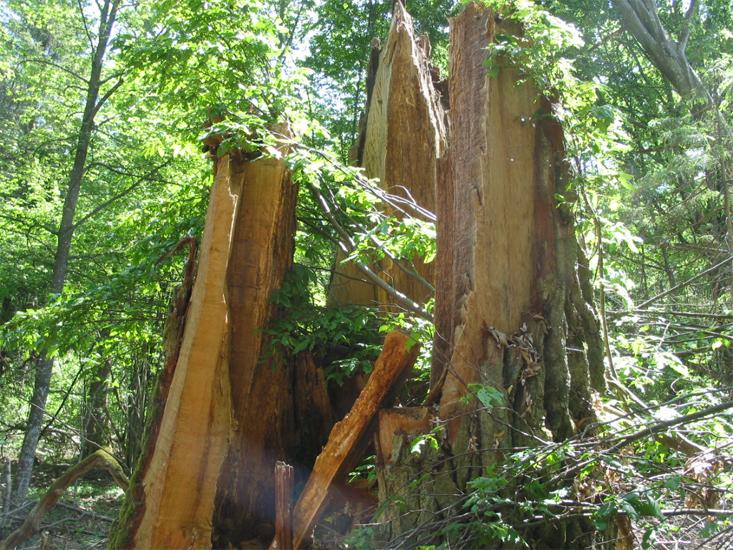
Giant oaks
A group of oaks 250-280 years old with trunks thicker than a metre on the Forest Secrets route: what counts as a giant tree in the forest.
More → - 12
Ash forest
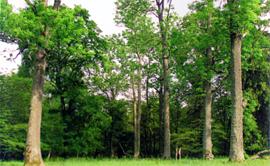
Ash woods hold a special place among the treasures of Białowieża. Like the old oak woods, they recall the almost vanished forests of Central Europe dominated by broadleaf trees. Scientists consider ash woods a great rarity, because they need a very narrow, almost unique combination of conditions: the soil must be very fertile and, importantly, of just the right moisture. With a little more water, alder grows; with a little less, oaks take the ash's place. The ash woods of Białowieża also preserve an exceptionally rich and specific flora and fauna.
- 13
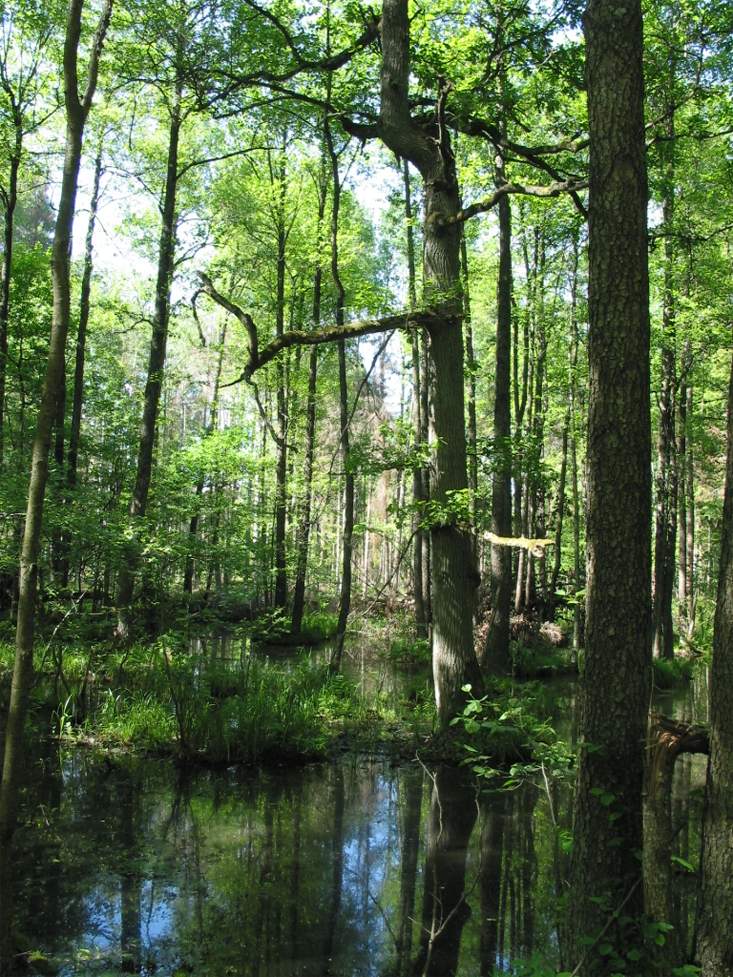
Black alder wood
Alder carr - black alder woods in damp hollows, the forest type least disturbed by people and a refuge for animals and birds.
More → - 14
Feeding glade
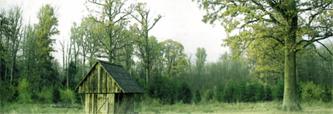
Since long ago this glade has served as a "canteen" for animals, above all red deer, roe deer and wild boar, which are fed with hay and grain. Many hoofed animals find it hard to survive harsh winters without the gamekeepers' help. In Soviet times, when "reserve" hunting flourished, similar feeding glades were set up all over the forest. Today there are far fewer, and the numbers of wild animals are regulated naturally.
- 16
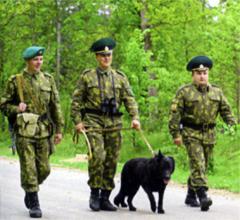
Border post
The border post named after G. I. Kofanov by the border that split the forest into Belarusian and Polish parts in 1944. On the Great Journey and Forest Secrets routes.
More → - 17
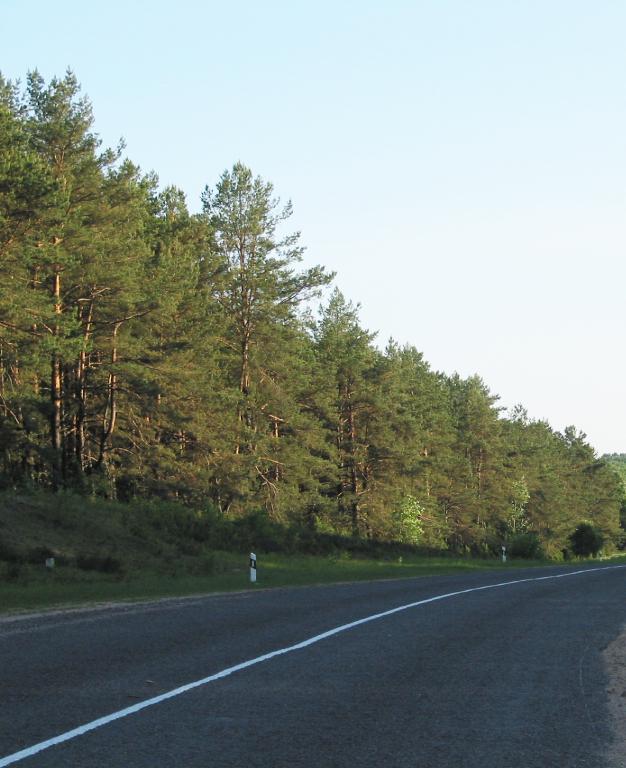
The Brest - Białowieża road
An old early 19th-century highway from Brest to Białowieża: under the asphalt lie the cobbles once travelled by stagecoaches and carriages.
More → - 18
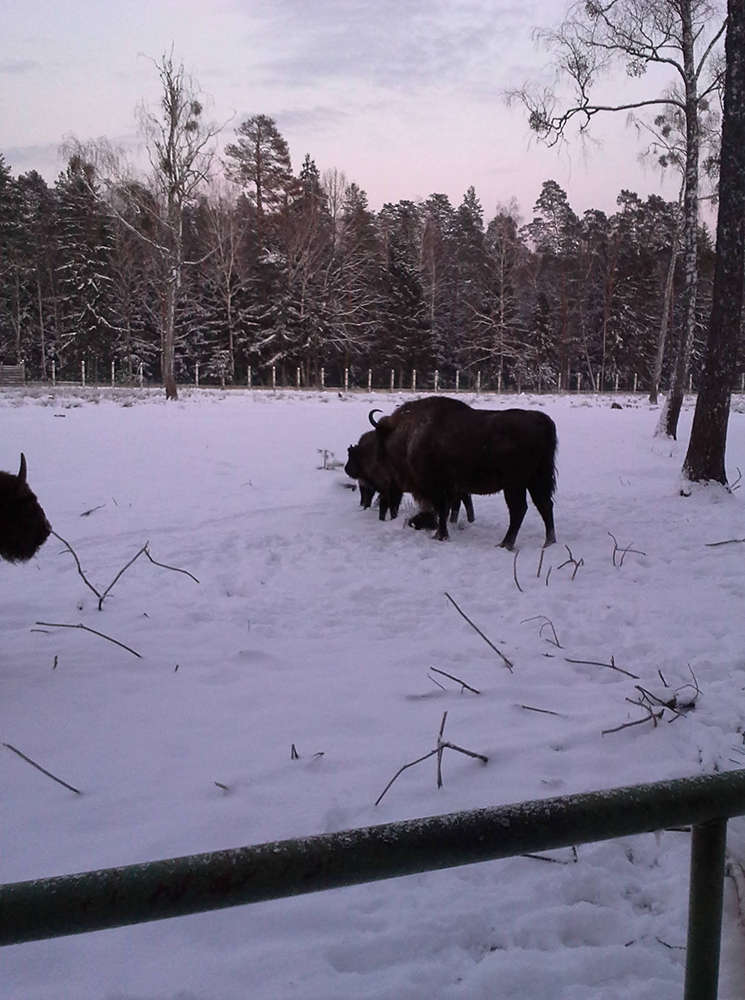
Wildlife enclosures
Enclosures by the Museum of Nature covering about 20 hectares: bison, deer, elk, wild boar, wolves, lynx and other animals of the forest up close. The first menagerie here dates from 1841.
More →