Animal Crossing
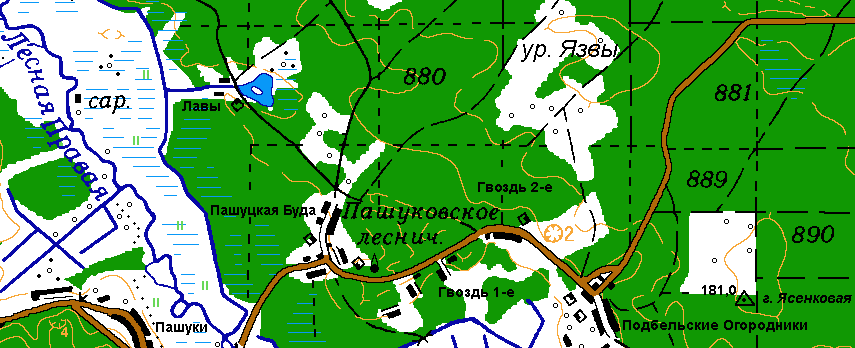
A 16 km cycling route along the southern edge of the forest via Pashutskaya Buda: a forest pond, a fen, the Lavy and Yazvy tracts and an animal crossing.
- Type
- Cycling routes
- Length
- 16 km
- Time
- 2.5 h
- Difficulty
- moderate
- Stops
- 14
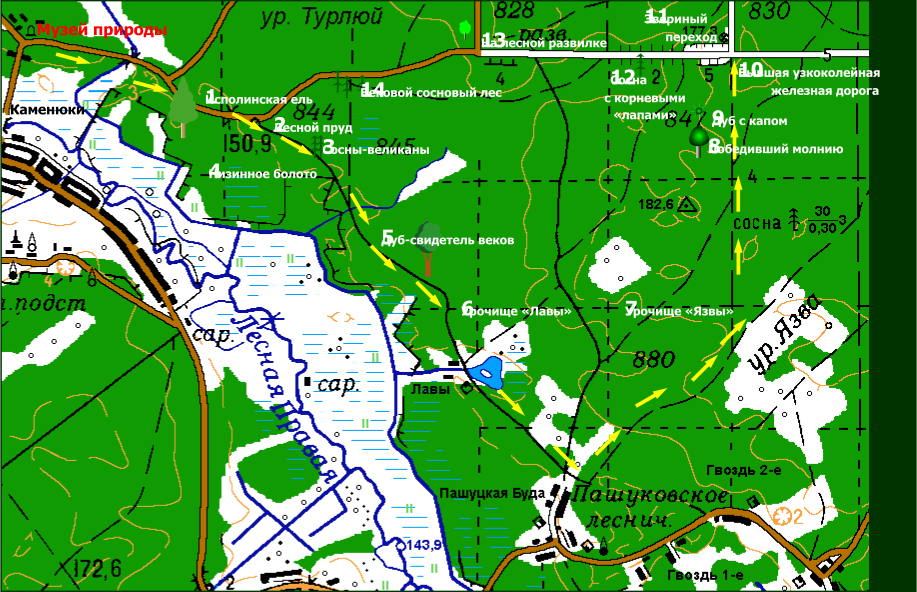
The route runs along the southern edge of the forest - from the Museum of Nature through Pashutskaya Buda and compartment 830 back to the museum. It is 16 kilometres long and takes about two and a half hours. This is the "wildest" of the cycling routes: only a third of it is on asphalt, the rest on dirt forest roads, and the woods alternate with glades, floodplain and bog.
Along the route are a forest pond, a giant spruce and giant pines, a fen, the Witness Oak, the Lavy and Yazvy tracts, an oak that survived a lightning strike, an oak with a huge burl and a pine with root "paws". The highlight is the animal crossing: a gentle slope into the cutting of a former narrow-gauge railway where animals cross the road; fresh tracks of roe deer, wild boar and red deer can be seen here every day, and in the morning and evening you may meet the animals themselves. The way back follows the old railway embankment and an ancient pine forest.
Check the visiting procedure on the national park's website.
Stops
- 1
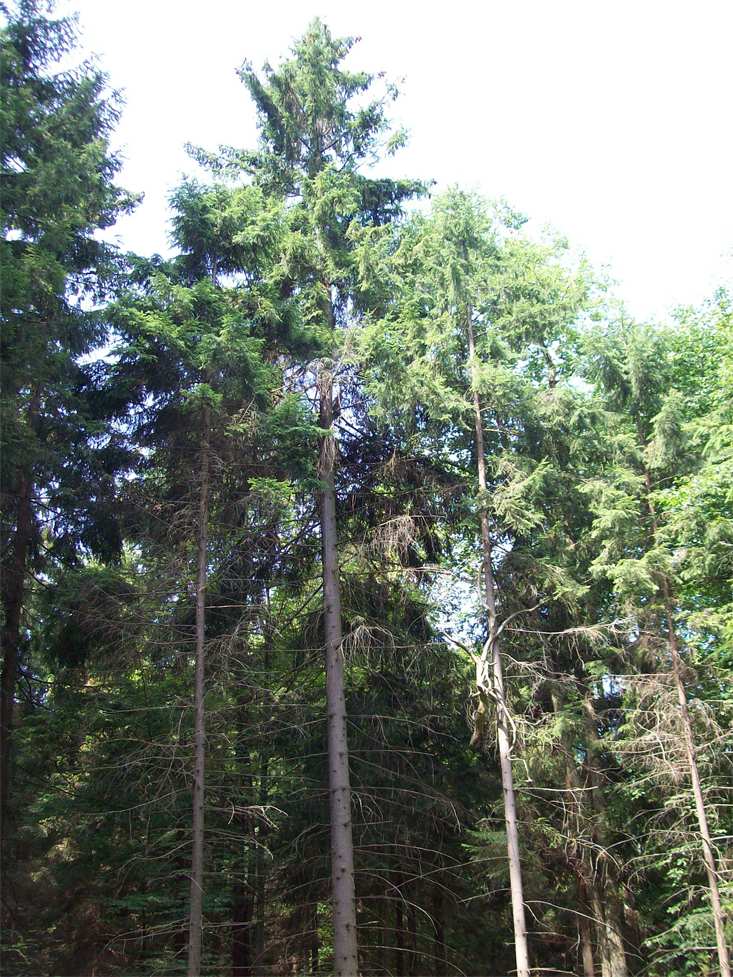
The giant spruce
A spruce more than 40 metres tall, over 200 years old and nearly 90 cm thick - a stop on the Tsar's Glade and Animal Crossing routes.
More → - 2
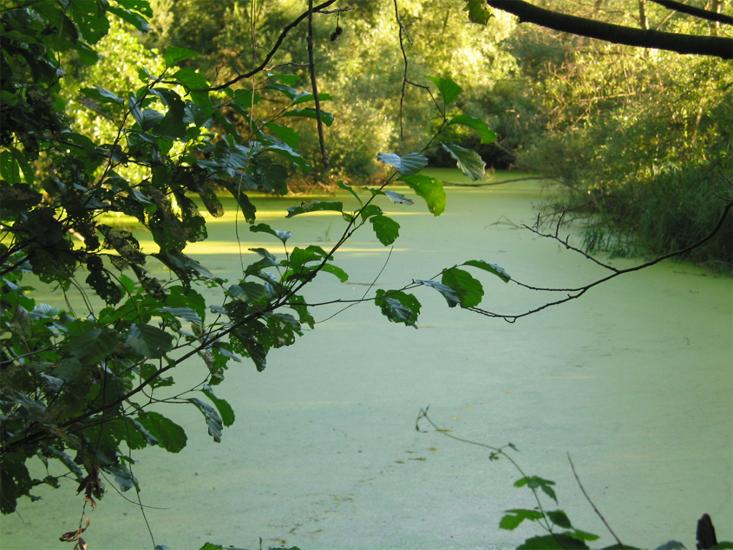
Forest pond
One of some fifty forest ponds dug in Soviet times as watering places for game and fire ponds. On the Animal Crossing route.
More → - 3
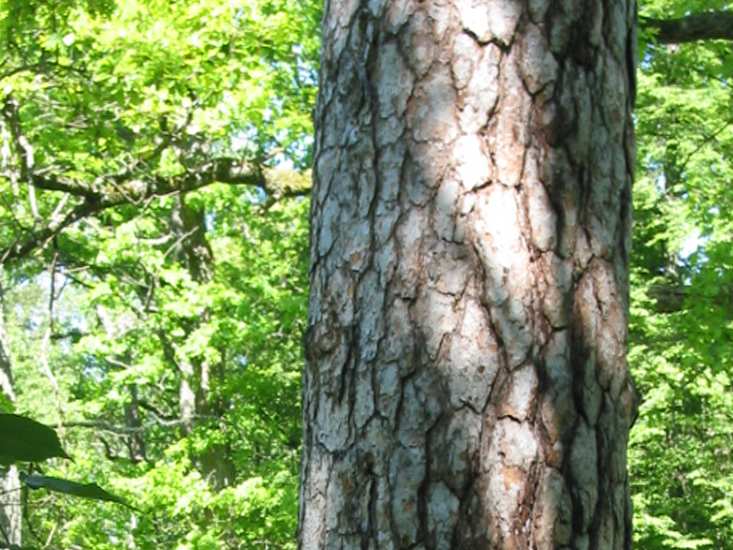
Giant pines
Two huge pines over 250 years old with trunks about a metre thick by the road of the Animal Crossing route: pines found nowhere else in Belarus.
More → - 4
Lowland fen
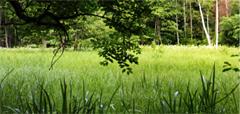
In the past a chain of lowland fens stretched along the southern and eastern edges of the forest, including some fairly large open bogs - open meaning that the quaking mire never became overgrown with trees and shrubs, and from a distance the bogs looked like endless lush meadows. Most of these remarkable reservoirs of life were drained, the heaviest blow coming in the 20th century. Only the forest's Dikoye bog survives intact - perhaps the wildest bog of its kind in Europe. On small patches of former fens you can still see a great many rare and protected plants and insects. The patch on this route is typical of the forest; places like it contribute a great deal to the biodiversity of the whole area.
- 5
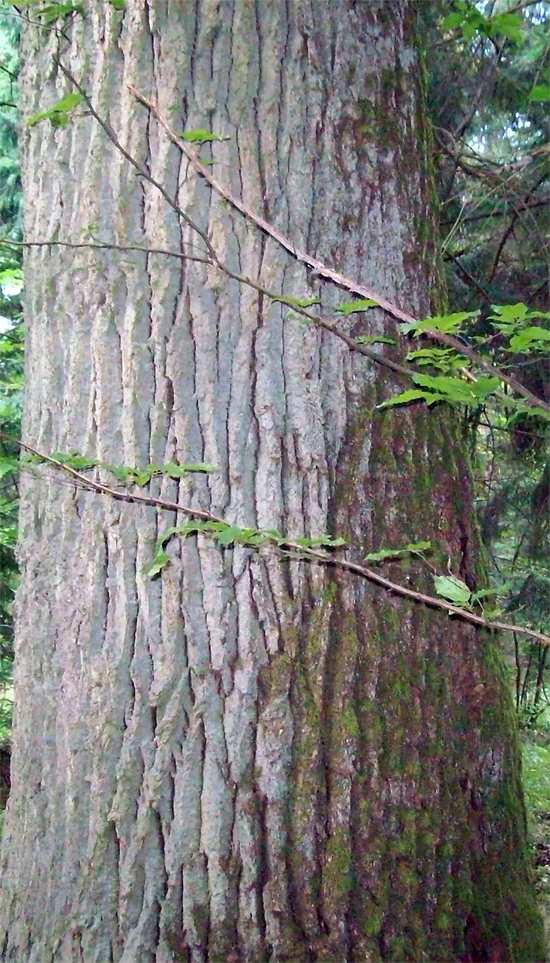
The Witness Oak
An oak over 300 years old on a rise in the middle of boggy forest, with a trunk about 1.3 metres thick. A stop on the Animal Crossing route.
More → - 6
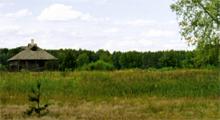
Lavy tract
A glade in the Lesnaya floodplain on the site of an old farmstead where 16th-century coins were found; the farm disappeared in the 1970s and a pond is here now.
More → - 7
Yazvy tract
A large glade where stone axes of an ancient settlement were found - a favourite haunt of bison. The tract is mentioned in the Ordinance of 1641.
More → - 8
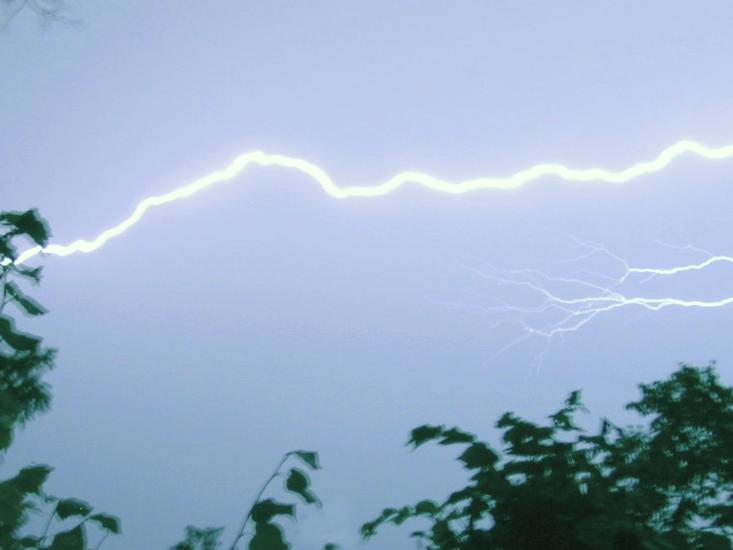
The oak that beat lightning
An old oak with a hollow burnt out by lightning that is still alive - a stop on the Animal Crossing route.
More → - 9
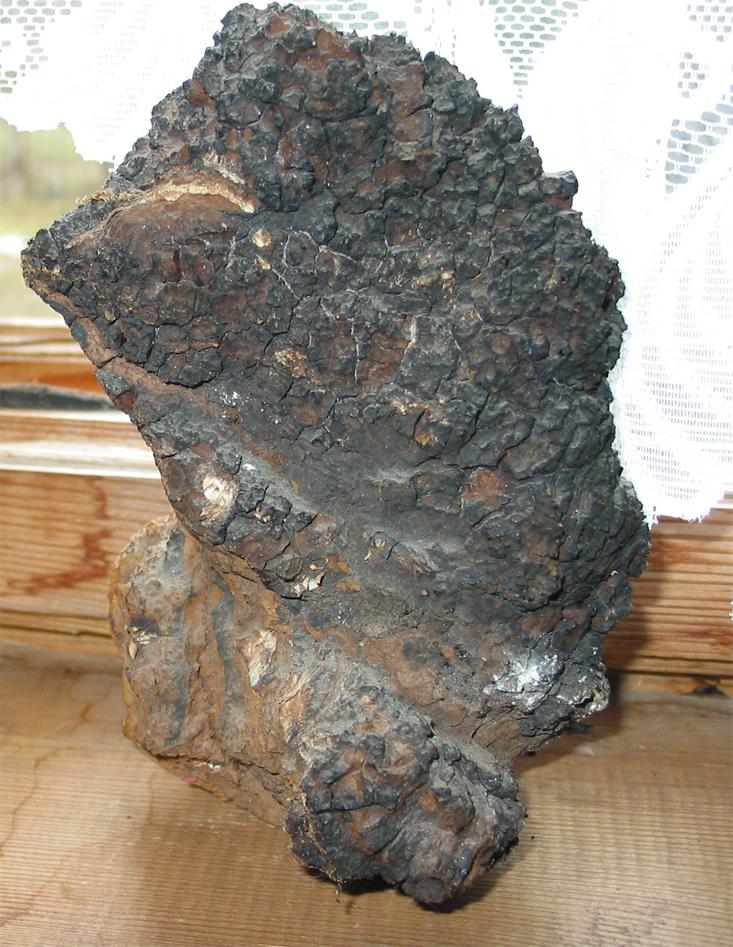
Oak with a burl
An oak with a large burl on the Animal Crossing route: in this forest burls survive because trees are not felled.
More → - 10
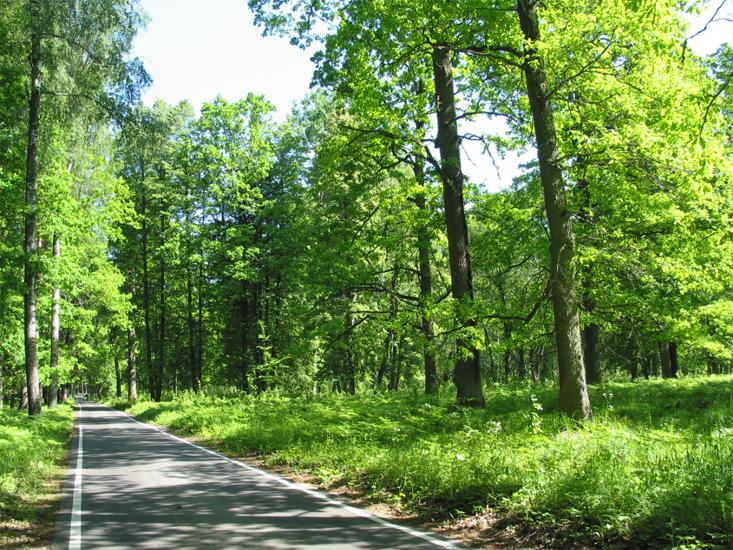
Former narrow-gauge railway
The embankment of a narrow-gauge railway built by the occupiers in 1915-1918: 325 km of track and 4.5 million cubic metres of timber taken out. A stop on four routes.
More → - 11
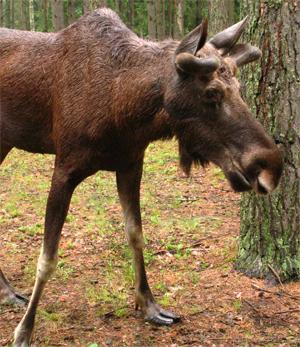
Animal crossing
A place where animals cross the road down a gentle slope into the cutting of an old narrow-gauge line: fresh tracks of roe deer, boar and deer every day.
More → - 12
Pine with root "paws"
A pine 38 metres tall and more than 300 years old, with mighty root "paws" - a stop on the Animal Crossing route.
More → - 13
At the forest fork
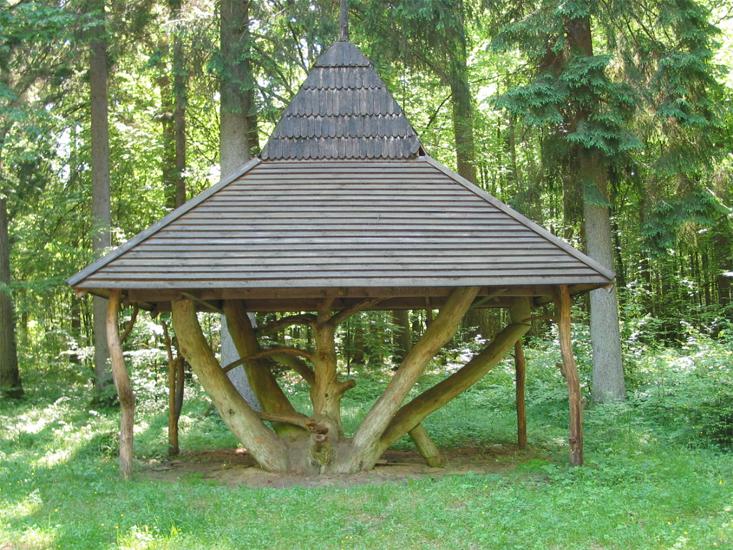
A fork in the forest roads with an arbour on the site of a 19th-century forester's house: bird cherry and dog rose planted by people. On two cycling routes.
More → - 14
Ancient pine forest
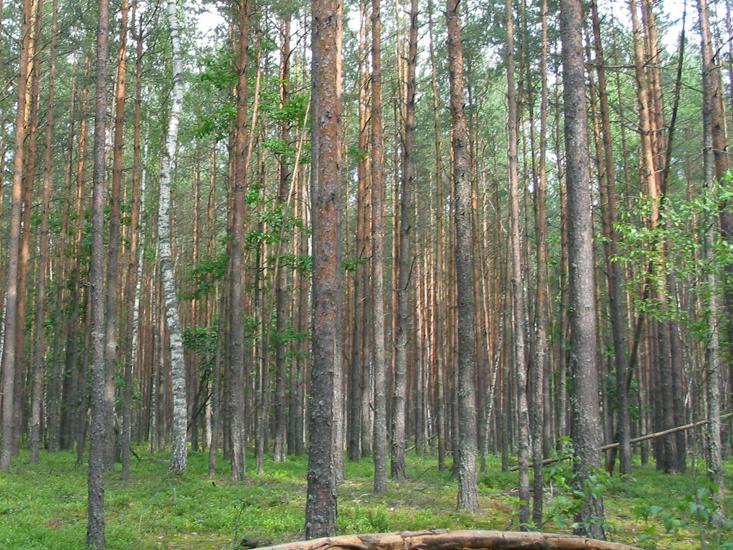
An old pine forest almost 200 years old that grew back by itself after the great fire of 1811. In Belarus such stands exist only in this forest.
More →