Protected Oak Wood
A 2.1 km nature trail through the old oak wood of compartment 807a at the edge of the strictly protected zone: sessile oak, hornbeam, maple, a giant pine.
- Type
- Walking trails
- Length
- 2.1 km
- Time
- 1.5 h
- Difficulty
- easy
- Stops
- 16
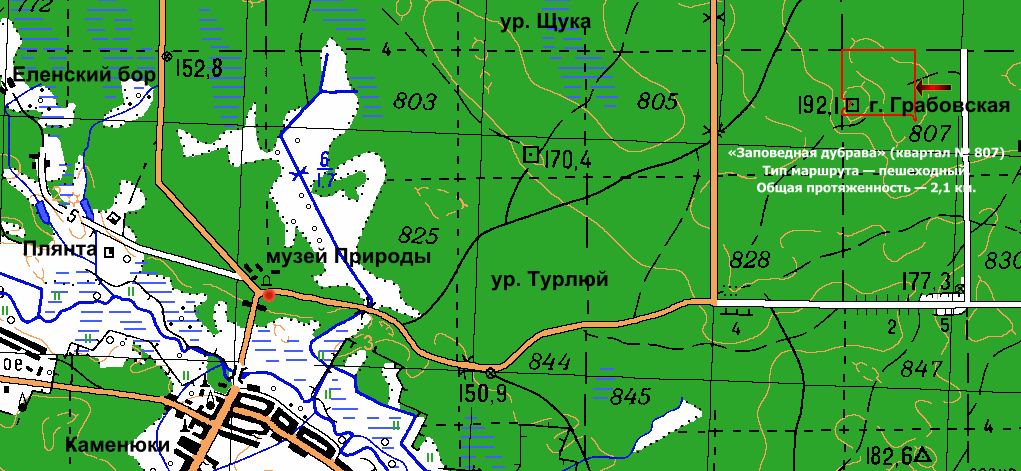
The park's only walking trail runs through compartment 807a, along the edge of the strictly protected zone. It is a short loop - 2.1 kilometres, about an hour and a half at a leisurely pace - but on the way you can see almost all the main trees of the forest: old pedunculate and sessile oaks, hornbeam, maple, ash, aspen, birch, spruce and a giant pine.
The special feature of this oak wood is the sessile oak. In Belarus it grows in only a few places, and in the forest special compartments are set aside to protect it. The trail also shows traces of people: a place where charcoal was once burned and an old hunting ride - a narrow clearing along which game was driven during hunts. On a permanent sample plot scientists have been watching for decades how the forest lives without human interference.
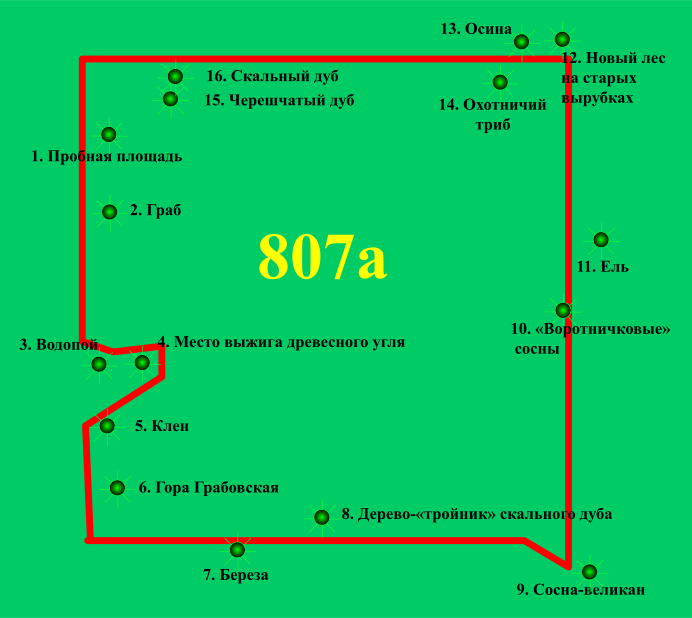
The stops are marked on the trail with numbered boards - the list below uses the same numbers.
Stops
- 1
Sample plot
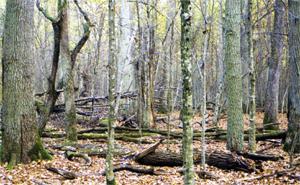
The name "sample plot" may sound odd to the uninitiated, but it means a lot to scientists. It refers to special forest areas where long-term monitoring and research are carried out to follow how natural ecosystems develop. The first such plots in Białowieża Forest were laid out in the early 1950s. Sample plots are strictly untouchable.
- 2
Hornbeam
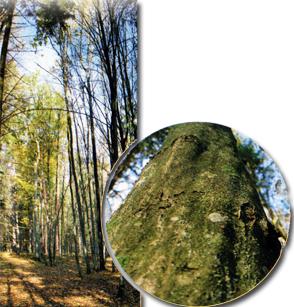
The hornbeam is a tree of Europe's broadleaf forests and a constant companion of the oak. Its wood is harder and denser than oak, and the tree can be called a natural indicator: wherever hornbeam grows, the soil is fertile and rich. In Belarus hornbeam occurs in the southern and western districts. Single trees grow almost everywhere in the forest, but most interesting of all, there are real hornbeam woods here.
- 3
Watering place
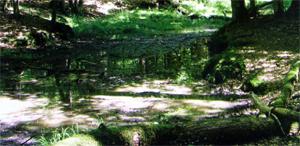
This artificial hollow was originally dug for producing potash, probably as early as the 18th century, when the simplest burning methods were used. Beneath the topsoil was clay, and the hollow filled with water. In time the forest's wild residents discovered the place, and for many years animals from the surrounding forest, bison included, have been coming here to drink.
- 4
Charcoal burning site
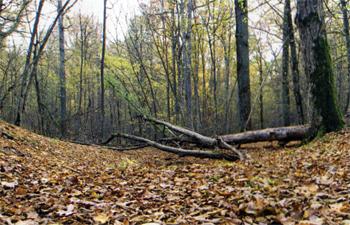
The shallow round pits that travellers sometimes come across in the forest are traces of its early industrial use. At the end of the 18th century Antoni Tyzenhauz, chief treasurer of the Grand Duchy of Lithuania, organised large-scale logging and set up various industries in the forest, including charcoal and potash production. Potash was obtained by burning wood in special pits.
- 5
Maple
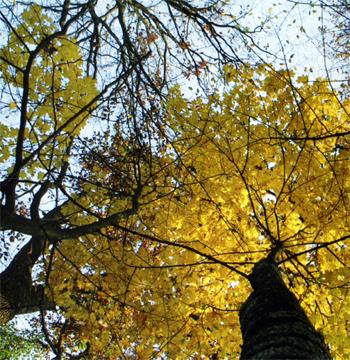
Maple often grows together with oak. This typical broadleaf European tree is familiar in mixed forests but usually occurs in small numbers. When scientists speak of a maple forest, it is a geobotanical sensation and an extreme rarity. All the more remarkable, then, that the forest has old natural maple woods in which the trees are on average more than 150 years old - a unique natural phenomenon for Belarus and other countries of Eastern Europe.
- 6
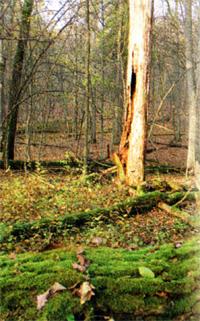
Hornbeam Hill
A rise 192 metres above sea level on the Protected Oak Wood trail: fertile soil on the top, hornbeams and the rare sessile oak.
More → - 7
Birch
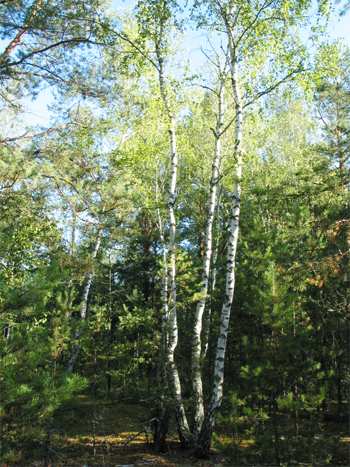
Celebrated in Slavic folklore, the birch is just an "admixture" in mixed forests as far as foresters are concerned. This small-leaved tree usually lives no more than 100 years, so there is no birch in old natural forests: it fills only rides, clearings and forest edges. Alongside the silver birch, the downy birch grows in the forest - a tree usually found in hollows and bogs.
- 8
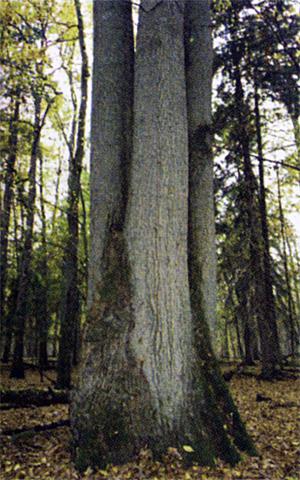
Triple-trunked sessile oak
A sessile oak with three equal trunks on the Protected Oak Wood trail: two rarities of the forest in one tree.
More → - 9
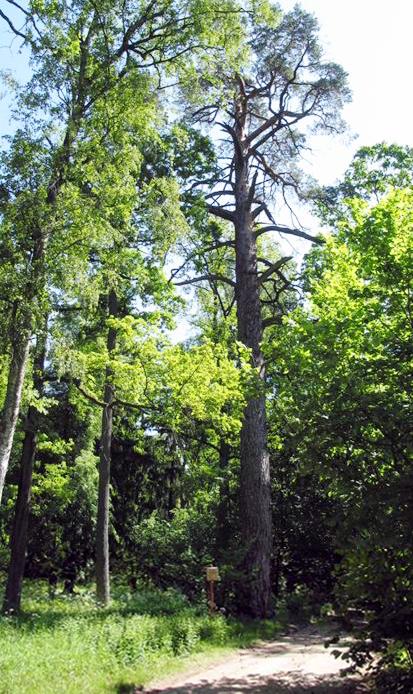
The giant pine
A pine more than 300 years old with a trunk over a metre thick on the Protected Oak Wood walking trail.
More → - 11
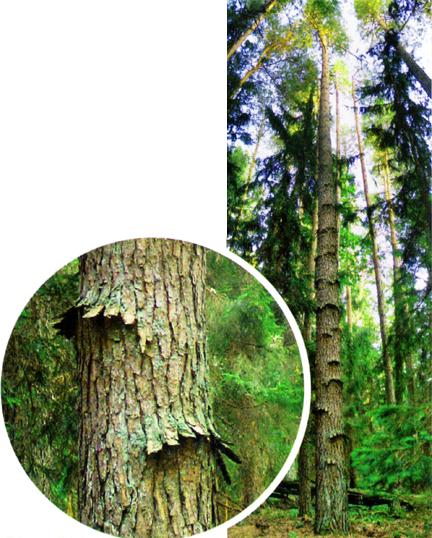
"Collar" pines
Two pines with "collars" of raised bark on the Protected Oak Wood trail - a rare phenomenon that scientists have not yet explained.
More → - 12
Spruce
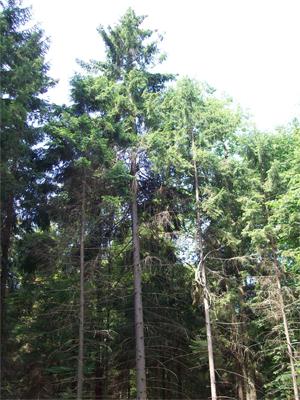
Few people know that spruces are the natural "skyscrapers" of these parts. Some can reach 50 metres in height, and no trees in Belarus are taller. The forest has many magnificent spruces, including giants of almost maximum size. Spruce wood has long been used not only in building and furniture making: its fine resonant properties make it a material for musical instruments.
- 13
New forest on old fellings
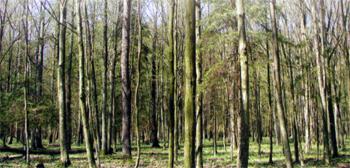
The trail passes an old felling: in the 1920s the British company The Century European Timber Corporation, which held a concession to "develop" the forest, logged here ruthlessly. Today visitors can see for themselves the difference between primeval natural forest and new forest that has grown on a former clear-cut. The trees to the right and left of the trail are so different that it becomes clear: a truly majestic forest does not grow even in a hundred years - it takes centuries.
- 14
Aspen
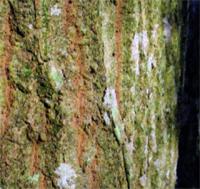
The aspen is a regular in many forests, but in Białowieża it has a special niche. An experienced forester can spot the site of old fellings by the abundance of aspen. The reason is that aspen does not live long (80-100 years on average) and is prone to rot, yet it loves light and grows on rich soils. So in the ancient forest aspen appears on former glades, burnt areas and windfalls - and disappears as soon as oaks, maples, ashes and pines gain strength around it.
- 15
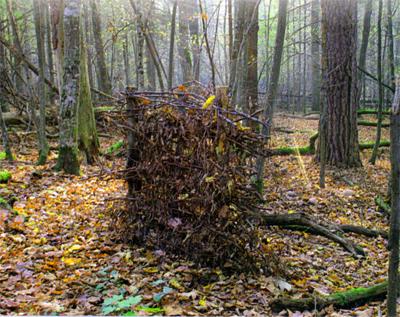
Hunting ride
A narrow ride for driven hunts with stands - hides for the shooters: an old hunting technique on the Protected Oak Wood trail.
More → - 16
Pedunculate oak
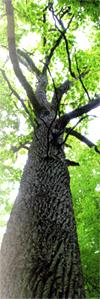
That is the full name of this outstanding tree - the pedunculate or common oak. The oak is a hero of folk epic, the embodiment of strength, steadfastness and power. Here popular belief is right: it is the longest-living tree of European forests, holds firmly to the ground, has strong, noble wood and impressive size, and its appearance is associated with wisdom and calm strength. In Białowieża Forest oaks live up to 700 years, their crowns rise up to 40 metres, and the trunks of some giants are two metres thick. The hollows of old oaks host whole communities of fungi and insects, many of them protected species.
- 17
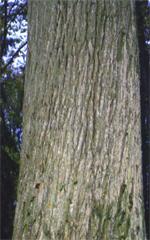
Sessile oak
The sessile oak is a guest from the distant past. Only a handful of places on the continent remain where this splendid tree grows in natural conditions - the Caucasus, Crimea, the Carpathians and the Alps. In Belarus it has a single address: Białowieża Forest. It differs from the common oak in its bark, the shape of its crown, narrower leaves and, finally, acorns without stalks, attached directly to the branches. The forest is more than a refuge for this ancient tree: in the strictly protected zone whole woods dominated by sessile oak survive, so unique that they attract researchers from all over Europe. The sessile oak is listed in the Red Book of Belarus.